
Truck Loan Finance :: News
SHARE

Share this news item!

Ampol’s M1 Charging Rollout Changes the EV Truck Finance Conversation

Truck-accessible charging on the Sydney-Newcastle corridor is useful progress, but not a complete answer for fleet buyers

Ampol’s M1 Charging Rollout Changes the EV Truck Finance Conversation?w=400

The information on this website is general in nature and does not take into account your objectives, financial situation, or needs. Consider seeking personal advice from a licensed adviser before acting on any information.

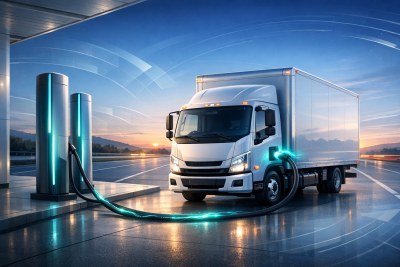
Ampol’s new AmpCharge rollout at its M1 Wyong service centres gives Australian truck operators another practical signal that public charging infrastructure is starting to move closer to freight use, not just passenger cars.
The development matters because the Sydney-Newcastle corridor is a heavily used route for regional distribution, construction, service fleets and time-sensitive freight, and charging availability can affect whether an electric truck purchase stacks up commercially.

The company has unveiled electric vehicle charging at its dual Ampol Foodary M1 Wyong sites, developed with Ausgrid and charging technology provider Kwetta. The northbound site is already live, while the southbound location was scheduled to be available by late November 2026. Each site includes eight charging bays, with two drive-through bays intended to accommodate larger commercial vehicles as well as vehicles towing caravans or trailers.

For owner-drivers and small fleets, the most important point is not that one service centre now has chargers. It is that a major transport energy provider is testing a dynamic connection model on a freight-relevant corridor. Instead of relying only on traditional fixed network upgrades, the system can adjust available charging capacity according to network conditions. In plain terms, that could help high-capacity charging sites become easier to deploy where grid constraints would otherwise slow projects down.

That said, public charging should not be treated as a substitute for proper fleet planning. Electric truck economics depend on route length, battery size, payload, depot access, charging speed, dwell time, electricity pricing and vehicle utilisation. A truck that works well on predictable metro deliveries may be less suitable for longer or irregular tasks unless charging stops can be built into the operating schedule without hurting revenue.

The finance implications are also broader than the purchase price. Buyers considering an electric rigid, van or specialised truck may need to compare diesel and electric options across whole-of-life costs, including energy, maintenance, insurance, downtime and residual value uncertainty. If a business is modelling finance scenarios, repayment estimates can help illustrate how different purchase prices, deposits, terms and interest rate assumptions affect cash flow, but they do not replace lender pricing or professional advice.

The Wyong rollout is a positive infrastructure marker, particularly for operators already assessing lower-emission vehicles on fixed routes between Sydney, the Central Coast, Newcastle and nearby distribution points. However, it is still one piece of a larger transition. Before committing capital, businesses may wish to document realistic route data, confirm charging access, allow for seasonal freight variation and stress-test whether the truck can keep earning if public charging is busy, slower than expected or temporarily unavailable.

Published:Tuesday, 24th Nov 2026
Author: Paige Estritori

Please Note: We do not endorse any specific products or companies. Some content is sourced from third parties, including press releases, and may not be independently verified for accuracy or completeness.

Share this news item:

Rate this article

0 Comments

No comments yet. Be the first to share your thoughts.

Finance News

Ampol’s M1 Charging Rollout Changes the EV Truck Finance Conversation
24 Nov 2026: Paige Estritori
Ampol’s new AmpCharge rollout at its M1 Wyong service centres gives Australian truck operators another practical signal that public charging infrastructure is starting to move closer to freight use, not just passenger cars. The development matters because the Sydney-Newcastle corridor is a heavily used route for regional distribution, construction, service fleets and time-sensitive freight, and charging availability can affect whether an electric truck purchase stacks up commercially. - read more
Fuel Cost Recovery Rules Put Diesel Costs Back in the Finance Conversation
17 Nov 2026: Paige Estritori
The reinstatement of Australia’s road transport fuel cost recovery order from 23 November 2026 gives many truck operators and owner-drivers a fresh mechanism for dealing with elevated diesel prices, but it is not a cure-all for cost pressure. For small fleets and self-employed operators, the practical issue is how quickly fuel movements are reflected in revenue, and whether that timing supports wages, maintenance, tax obligations and finance commitments. - read more
New FLEETLEAP Alliance Targets Diesel Costs and EV Uncertainty
10 Nov 2026: Paige Estritori
A new Australian freight alliance, FLEETLEAP, has been launched to help truck operators make more informed decisions about fuel efficiency, emissions reduction and electric truck investment. Announced at the NatRoad National Conference on the Gold Coast on 6 November 2026, the project brings together transport associations, energy specialists, insurers and technology providers at a time when operating costs and technology choices are putting extra pressure on fleet planning. - read more
NT Heavy Vehicle Rego Freeze Gives Operators Breathing Room
03 Nov 2026: Paige Estritori
The Northern Territory Government’s 12-month freeze on heavy vehicle registration fees is a targeted cost-relief measure for transport operators working in one of Australia’s most demanding freight environments. Announced on 2 November 2026, the freeze keeps heavy vehicle registration fees at the levels set on 1 October 2025, with a review due in mid-2027 to decide whether a further pause is warranted. - read more


Truck Loan Articles

What Credit Score Do You Need for a Truck Loan?
Are you thinking about getting a new or used truck but unsure of which one is the better choice? This article is here to help guide you through the financial considerations involved in truck loans. We'll talk through what makes new trucks so appealing, with their cutting-edge tech and features, and what makes used trucks a more budget-friendly option. - read more
GST, Depreciation and Tax Considerations for Financed Business Trucks
Financing a truck can affect more than repayments. Australian businesses should understand how GST, depreciation, interest, business-use records and disposal may interact with tax planning before committing to a truck finance structure. - read more
Truck Loan Eligibility and Documentation Requirements in Australia
Applying for truck finance is easier to plan when you understand the eligibility factors lenders commonly assess and the documents they may request. This guide explains ABN requirements, business history, financial evidence, truck details and low doc considerations for Australian applicants. - read more
What Affects Truck Loan Interest Rates and Repayments?
Truck loan interest rates and repayments can vary widely depending on the borrower, the truck, the loan structure and the lender's criteria. This guide explains the main factors that influence commercial truck loan costs in Australia. - read more

Knowledgebase
Amortization Schedule:
A table that provides details of each periodic payment on a loan, including the amount going towards principal and interest.